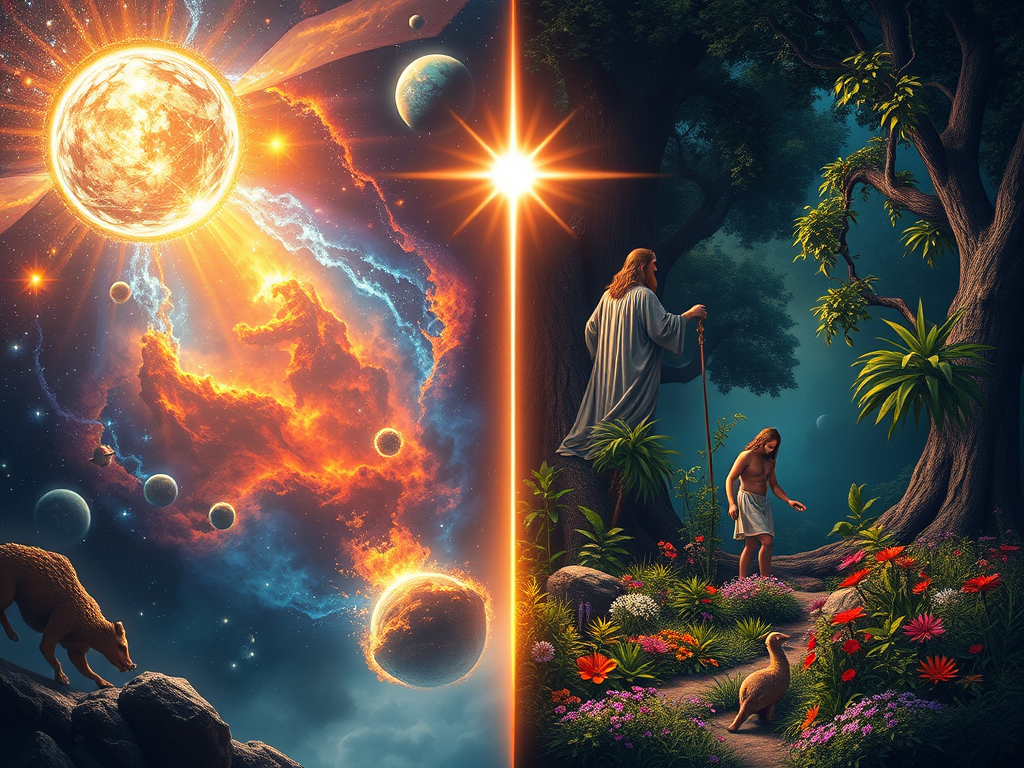
Ever notice that the Bible seems to tell the creation story twice? It’s not a mistake—it’s actually one of the most fascinating features of Genesis.
The Two Stories Side by Side
Genesis 1:1-2:3 gives us the grand cosmic version: God speaks the universe into existence over six days, creates male and female humans together on day six, then rests on the seventh day. It’s orderly, majestic, and feels almost liturgical.
Genesis 2:4-25 zooms in for a more intimate telling: God forms a man from dust, plants a garden, creates animals, and finally crafts a woman from the man’s rib. Here God is hands-on—breathing life, molding clay, taking evening walks.
Why Two Different Versions?
These stories come from different ancient traditions that the biblical editors chose to preserve rather than blend together:
The Cosmic Story (Genesis 1) was likely written by priests during Israel’s exile in Babylon (6th century BCE). They were emphasizing God’s ultimate authority over creation and the importance of Sabbath rest. Think of it as theology for a people who needed to remember God was still in control of the universe.
The Garden Story (Genesis 2) is older, possibly from around Solomon’s time (10th century BCE). It reflects an agricultural society concerned with relationships, work, and moral choices. This is theology for people wondering about their daily lives and relationships.
What Makes Them Different?
Different Names for God
- Genesis 1 uses Elohim (the universal, majestic God)
- Genesis 2 uses YHWH Elohim (the personal, covenant-making God)
Different Creation Orders
- Genesis 1: plants → animals → humans (male and female together)
- Genesis 2: man → plants → animals → woman
Different Views of Humanity
- Genesis 1: humans rule over creation as God’s representatives
- Genesis 2: humans tend creation as God’s gardeners
Different Tones
- Genesis 1: “And God said… and it was good” (cosmic and distant)
- Genesis 2: God breathes into nostrils and walks in the garden (intimate and close)
Ancient Context: Not Written in a Vacuum
These stories weren’t created from nothing. Ancient Mesopotamian cultures had their own creation epics—violent tales of gods fighting cosmic monsters and creating humans as slave laborers.
Genesis takes these familiar story elements but transforms them completely. No divine battles, no slave humans. Instead: a peaceful God creating through speech, humans made in God’s own image with dignity and purpose.
Why Keep Both Stories?
The biblical editors were brilliant. Rather than forcing these traditions into one “official” version, they preserved both because each captures something essential:
- Genesis 1 shows us God’s transcendent power and cosmic authority
- Genesis 2 shows us God’s intimate involvement in human life
Together they give us a God who is both mighty enough to speak galaxies into existence and caring enough to form us with divine hands.
What This Means for Us
These dual creation accounts address different aspects of human experience:
When we need perspective on life’s chaos, Genesis 1 reminds us that God brings order from disorder and calls creation “good.”
When we need to understand our relationships and purpose, Genesis 2 shows us we’re made for connection—with God, each other, and creation itself.
When we debate environmental responsibility, Genesis 1 calls us to rule wisely as God’s representatives, while Genesis 2 calls us to tend creation as God’s gardeners.
When we consider human dignity, both stories affirm our special place—we bear God’s image (Genesis 1) and receive God’s breath (Genesis 2).
The Bottom Line
The Bible doesn’t start with two creation stories by accident. It starts this way because the mystery of existence is too rich for any single telling. We need both the cosmic perspective and the intimate view, both the transcendent God and the personal God, both our royal calling and our gardening vocation.
Maybe that’s exactly what the ancient editors intended—not to give us one simple answer about creation, but to invite us into the beautiful complexity of what it means to be human in God’s world.
What do you think? Do these two perspectives on creation speak to different aspects of your own experience? Share your thoughts in the comments below.
Want to Dig Deeper?
- For the historical background: Richard Friedman’s “Who Wrote the Bible?”
- For the ancient context: John Walton’s “The Lost World of Genesis One”
- For the big theological questions: Tim Keller’s “The Reason for God”
 Sacred Scholar
Leave a comment